BukuKu UMKM Case Study: From Manual Records to Real-Time Reports
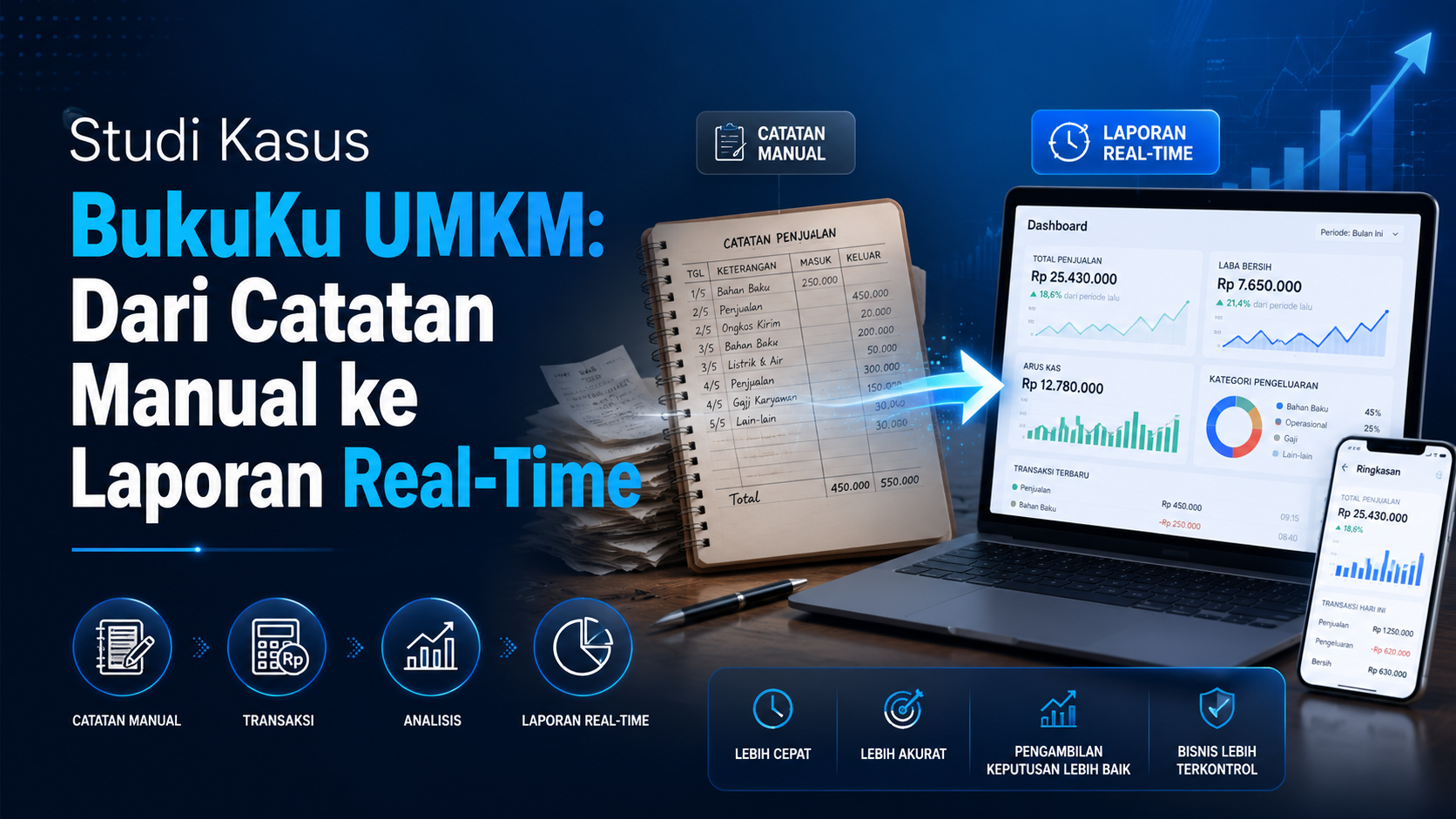
Many small businesses still record income and expenses in notebooks, chats, or separate spreadsheets. This works at first, but owners struggle to calculate profit, find old transactions, and remember debts as activity grows.
The Initial Problems
- Transactions are not always recorded on the same day.
- Cash, bank transfer, QRIS, and e-wallet payments are mixed together.
- Monthly reports must be rebuilt manually.
- Debts and receivables are easy to miss.
- Business records do not have a consistent backup flow.
The Solution
BukuKu UMKM was designed as a lightweight Android bookkeeping app. Owners record income or expenses, choose a category and payment method, and the system updates profit summaries and reports automatically.
Four main navigation areas separate Home, Transactions, Reports, and Debts. Profile, PIN, notifications, cloud, export, language, and currency settings live in one place without interrupting daily entry.
How It Is Used
- The owner sets up the business profile.
- Every transaction is entered through the add button.
- Amount, date, category, payment method, and receipt are completed.
- The entry updates history and the current report.
- The owner reviews margin, weekly trends, and outstanding debt.
Expected Result
The value is not simply moving a notebook onto a screen. The app gives financial recording a repeatable structure, helping owners understand their current position and make decisions from cleaner data.
Project Lesson
A small-business app must be quick to understand and comfortable to use on a phone. Features should follow frequent work, not the number of menus that can be added.
Explore BukuKu UMKM
Review the features, screenshots, workflow, and future development options.
View Project DetailsDiscuss a System